
IGCSE Subject Guides – The International General Certificate of Secondary Education (IGCSE) is one of the most recognized qualifications in the world, helping students prepare for further education or career opportunities. With a broad selection of subjects, the IGCSE provides a well-rounded education, allowing students to choose subjects that align with their interests and future aspirations. However, preparing for IGCSE exams can be overwhelming, especially with the vast content covered across different subjects.
This comprehensive IGCSE subject guide will help you navigate through each subject, understand what’s expected, and provide valuable revision tips to ensure you excel in your exams. If you’re looking to optimize your IGCSE revision, Gradelao is the perfect platform to provide you with resources, study techniques, and past papers to support your learning journey. Let’s explore the major IGCSE subjects and the best strategies for mastering them.
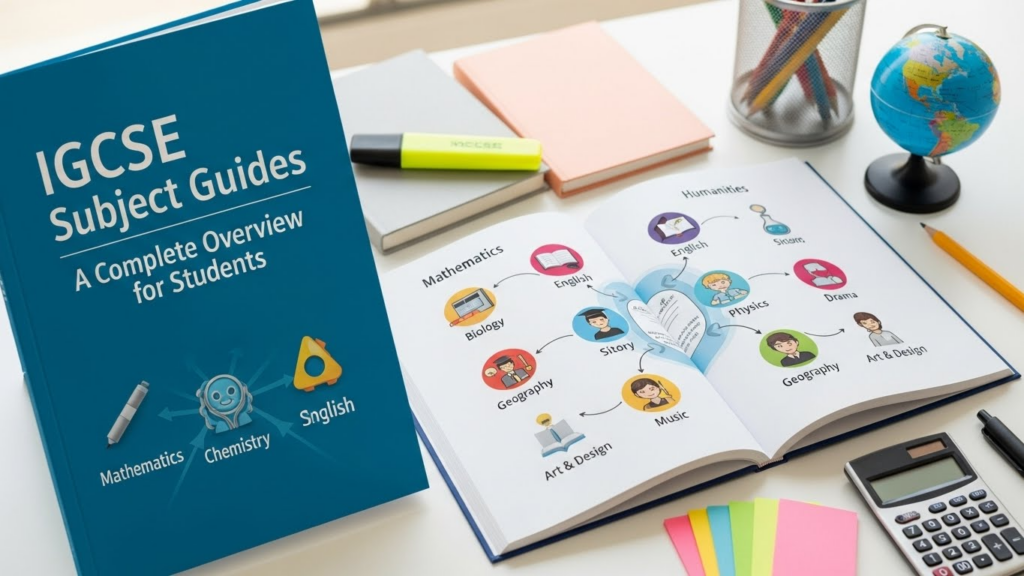
What Are IGCSE Subject Guides?
IGCSE subject guides are detailed overviews that provide insights into each subject’s content, exam format, and study strategies. These guides are designed to give students a clear understanding of what to expect from their IGCSE exams and how to approach the revision process effectively.
An IGCSE subject guide typically includes:
- A breakdown of the subject’s key topics.
- The types of questions likely to appear in the exam.
- Study techniques and tips for mastering each topic.
- Insights into the exam format, timing, and structure.
By following the guidance of these subject-specific resources, students can focus their efforts on the right areas, making their revision more efficient and targeted.
1. IGCSE Mathematics Guide
What the Subject Covers
Mathematics is one of the core subjects for IGCSE students. The subject covers:
- Number and algebra
- Geometry and measurement
- Probability and statistics
- Problem-solving and data interpretation
Exam Format
The IGCSE Mathematics exam typically consists of two papers:
- Paper 1: This is a non-calculator paper with a mix of multiple-choice, short-answer, and problem-solving questions.
- Paper 2/3: A calculator paper, which allows students to use a calculator while answering a similar range of questions.
Revision Tips
- Focus on mastering the basic formulas, as they are frequently tested.
- Use Gradelao’s collection of past papers to understand the question patterns and time constraints.
- Work through problem-solving questions to build your critical thinking skills.
- Practice speed and accuracy, as time management is essential in the exam.
2. IGCSE Physics Guide
What the Subject Covers
IGCSE Physics introduces students to the basic principles of physics, including:
- Mechanics (motion, forces, energy)
- Waves and optics (light, sound, waves)
- Electricity and magnetism (circuits, electromagnetism)
- Thermal physics (heat, energy transfer)
Exam Format
Physics exams usually have:
- Multiple-choice questions
- Structured questions involving calculations and problem-solving
- Data analysis and experimental design questions
Revision Tips
- Understand key formulas and units, as they are integral to solving problems.
- Focus on understanding concepts rather than just memorizing formulas.
- Complete practical experiments and apply theoretical knowledge to real-world situations.
- Use Gradelao’s past papers and revision notes to ensure you are fully prepared.
3. IGCSE Chemistry Guide
What the Subject Covers
Chemistry for IGCSE focuses on the study of matter and the changes it undergoes. Topics include:
- Atomic structure and bonding
- The periodic table
- Chemical reactions and equations
- Organic chemistry and acids/bases
Exam Format
Chemistry exams typically have:
- Multiple-choice questions
- Structured questions on theoretical and practical knowledge
- Data analysis and application questions
Revision Tips
- Practice writing balanced chemical equations and understanding reaction mechanisms.
- Use diagrams to represent atomic structures and molecular bonding.
- Use Gradelao resources to access real-world applications of chemistry concepts.
- Test yourself with past papers to familiarize yourself with the exam format and common question types.
4. IGCSE Biology Guide
What the Subject Covers
IGCSE Biology is concerned with the study of living organisms and their environments. Key topics include:
- Cell biology and structure
- Human physiology
- Ecology and environment
- Genetics and evolution
- Plant biology and photosynthesis
Exam Format
Biology exams often include:
- Multiple-choice questions
- Structured questions, including short-answer questions and long essays
- Practical-based questions on experiments and data interpretation
Revision Tips
- Create detailed diagrams for processes like photosynthesis, respiration, and circulation.
- Practice explaining biological processes in clear and concise language.
- Use Gradelao to get access to interactive study materials and past papers that will help you test your knowledge.
5. IGCSE English Language Guide
What the Subject Covers
English Language is a critical subject that assesses both reading and writing skills. Topics include:
- Comprehension (understanding and analyzing texts)
- Writing (transactional, descriptive, and narrative writing)
- Grammar and language techniques
Exam Format
The exam usually has two components:
- Paper 1: Reading comprehension, where students analyze and respond to texts.
- Paper 2: Writing, where students are asked to write essays or letters on a given topic.
Revision Tips
- Read a wide range of materials, including fiction and non-fiction, to improve your comprehension and writing skills.
- Practice writing essays within the time limit to improve speed and structure.
- Use Gradelao’s writing guides and comprehension exercises to enhance your preparation.
6. IGCSE English Literature Guide
What the Subject Covers
English Literature focuses on the study of literary texts, including plays, poetry, and novels. The major areas of study include:
- Analysis of characters, themes, and plots in literary works
- Understanding the context and background of texts
- Literary devices and techniques used by authors
Exam Format
English Literature exams generally involve:
- Passage-based questions, requiring analysis of specific excerpts
- Essay-based questions, focusing on themes, characters, and analysis of the whole text
Revision Tips
- Read and annotate the set texts thoroughly, identifying key themes and character development.
- Practice writing analytical essays on key themes, supporting your arguments with quotations.
- Use Gradelao to access practice essays, model answers, and literature analysis guides.
7. IGCSE History Guide
What the Subject Covers
History for IGCSE covers key historical events, people, and movements. Topics include:
- International relations and conflict (e.g., World War I, World War II)
- Political systems and ideologies (e.g., communism, fascism)
- Social and cultural changes through history
Exam Format
History exams usually consist of:
- Source-based questions on historical documents
- Essay-style questions requiring detailed analysis and evaluation
Revision Tips
- Create timelines to understand the sequence of events.
- Focus on understanding cause-and-effect relationships in historical events.
- Use Gradelao to access past papers and practice answering source-based questions.
8. IGCSE Geography Guide
What the Subject Covers
IGCSE Geography explores both physical and human geography. Key topics include:
- Physical geography (e.g., rivers, climate)
- Human geography (e.g., population, urbanization)
- Environmental management
Exam Format
Geography exams typically have:
- Data response questions on maps, graphs, and case studies
- Essay-based questions on geographic issues
Revision Tips
- Study and interpret maps and graphs regularly.
- Familiarize yourself with real-world case studies and their application to geographical theories.
- Use Gradelao to access map exercises, practice questions, and environmental case studies.
9. IGCSE Business Studies Guide
What the Subject Covers
Business Studies focuses on the fundamentals of business, including:
- Business organization and structures
- Marketing and finance
- Human resources and management
Exam Format
Business Studies exams typically consist of:
- Multiple-choice questions
- Short-answer questions
- Case study-based questions
Revision Tips
- Understand key business terminology and real-world applications.
- Use Gradelao’s business study resources to access case studies and practice exam questions.
- Practice applying business concepts to hypothetical scenarios.
Final Thoughts
The IGCSE exams can be challenging, but with the right preparation and understanding of each subject, students can perform exceptionally well. Each subject in the IGCSE curriculum comes with its own set of challenges, but with a clear study plan, access to useful resources like Gradelao, and consistent practice, you can boost your chances of success.
By following the IGCSE subject guides outlined above, you can tailor your revision to suit the specific requirements of each subject. Whether you’re studying the sciences, humanities, or creative subjects, make sure you allocate time effectively and practice consistently using past papers and other revision tools available on Gradelao.
Visit Gradelao today to get access to a wide range of resources that will support your IGCSE revision, from past papers and study materials to expert tips and personalized study plans. With the right preparation, you’ll be ready to tackle your IGCSE exams confidently and successfully.