
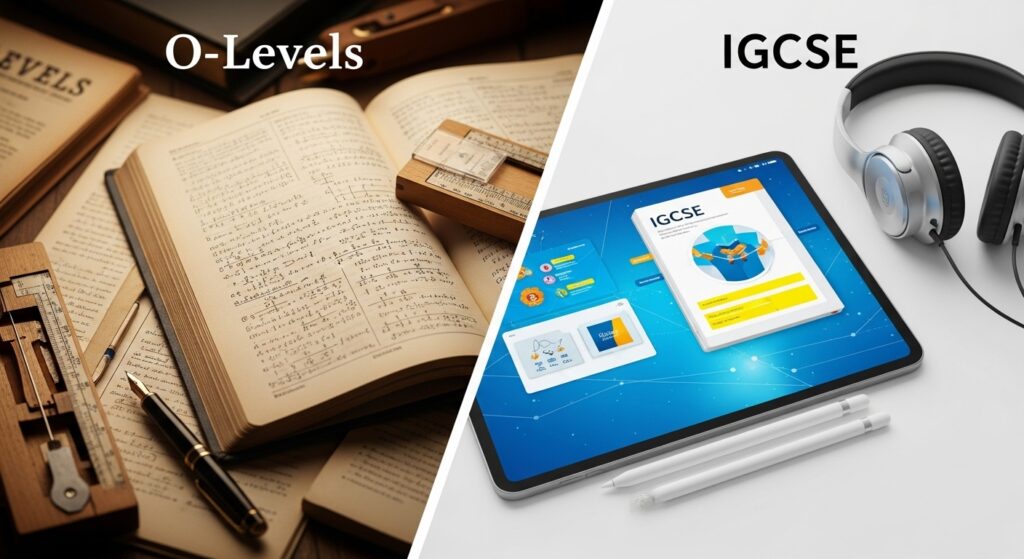
When it comes to secondary education, students have various options to choose from, with two of the most popular being the O-Level and IGCSE qualifications. Both are internationally recognized, but they differ in terms of curriculum, assessment methods, and flexibility. As students and parents seek the best educational pathway, the question often arises: Is O-Level better than IGCSE, or vice versa?
In this article, we’ll explore the key differences between O-Levels and IGCSE, their advantages, and how to decide which one is the better choice for you. With the guidance of gradelao.pk, this article will help you navigate your decision-making process effectively.
What Are O-Levels and IGCSE?
O-Levels
The O-Level (Ordinary Level) is a secondary school qualification that originated in the UK and is still widely used in many Commonwealth countries. It is typically taken by students around the age of 16 after completing their secondary education. O-Levels primarily focus on academic subjects and are considered the precursor to higher qualifications such as A-Levels.
IGCSE
The IGCSE (International General Certificate of Secondary Education) is a globally recognized qualification offered by Cambridge and other international boards. The IGCSE is designed to be more flexible and internationally inclusive, catering to students worldwide. It is also usually taken by students around the same age as those pursuing O-Levels.
Key Differences Between O-Levels and IGCSE
Here’s a breakdown of the key differences between O-Levels and IGCSE to help you better understand their distinctions:
1. Curriculum Design
- O-Levels: The O-Level curriculum tends to be more traditional and regionally focused. It follows a structured approach with a limited number of subjects and is primarily offered in Commonwealth countries like the UK, Pakistan, and some other parts of Asia and Africa.
- IGCSE: The IGCSE curriculum is more flexible and international in nature. It offers a broader range of subjects, including more than 70 options, and encourages students to take a well-rounded approach to their education. It also includes subjects that may not be covered in the O-Level curriculum, such as various modern languages, arts, and vocational subjects.
2. Assessment Methods
- O-Levels: O-Levels typically rely heavily on written examinations as the primary form of assessment. The focus is primarily on testing students’ knowledge and their ability to memorize and apply concepts under exam conditions.
- IGCSE: While IGCSE also involves written exams, it has a more diverse approach to assessment. In addition to exams, IGCSE includes coursework, practicals, and oral assessments (especially for languages and sciences). This more varied assessment method can provide a more comprehensive evaluation of students’ abilities and learning.
3. Subject Range
- O-Levels: O-Level qualifications usually allow students to choose from a smaller selection of subjects compared to IGCSE. Core subjects like English, mathematics, and science are mandatory, but the choice of additional subjects is somewhat more limited.
- IGCSE: One of the biggest advantages of the IGCSE is the vast range of subjects offered. Students have the flexibility to choose from over 70 subjects, ranging from sciences and mathematics to the humanities, languages, and creative arts. This wider choice allows students to pursue their academic interests more freely.
4. Global Recognition
- O-Levels: While O-Levels are widely recognized in many countries, their global acceptance is more concentrated in Commonwealth countries. They are less widely used in the US, Canada, and some parts of Europe.
- IGCSE: The IGCSE is internationally recognized and respected in countries around the world, including the US, UK, Canada, Australia, and Europe. It is the preferred qualification for many students in international schools due to its global appeal and flexibility.
Advantages of O-Levels
While the IGCSE has a more international scope, the O-Level qualification also has some advantages:
- Structured Curriculum: O-Levels offer a more traditional and structured curriculum, which some students may find easier to follow. The emphasis on exams prepares students for the rigors of A-Levels or other higher studies.
- Familiarity: In countries where O-Levels are a common qualification, such as the UK or Pakistan, students and universities are well-versed in the format, making the pathway clear and straightforward.
- Fewer Subjects: Some students may prefer fewer subjects to study, especially those who want to focus on mastering a specific area without the added complexity of a larger subject range.
Advantages of IGCSE
The IGCSE qualification offers several benefits, making it an attractive choice for students in international and diverse educational settings:
- Broader Subject Range: With a wide variety of subjects, students have the opportunity to explore multiple academic fields and tailor their education to their career aspirations.
- International Recognition: The global recognition of IGCSE means that it provides students with greater flexibility in applying to universities worldwide, making it the preferred choice for those seeking to study internationally.
- Diverse Assessment Methods: IGCSE offers a more diverse and comprehensive approach to assessment, including coursework and practicals. This helps students demonstrate their understanding and skills in ways that go beyond exam-based knowledge.
- Better Preparation for Higher Education: Due to its flexible and broad curriculum, IGCSE can better prepare students for university education, especially for those pursuing fields that require practical experience or creative thinking.
Which One Is Right for You: O-Levels or IGCSE?
Choosing between O-Levels and IGCSE ultimately depends on your personal preferences, future academic goals, and the learning environment that suits you best. Here are some factors to consider:
- Future University Plans: If you plan to attend university abroad, especially in regions like Europe, North America, or other parts of the world, IGCSE might be a better choice due to its wide international recognition.
- Subject Interests: If you are interested in a broad range of subjects and want the flexibility to explore diverse academic fields, the IGCSE curriculum would suit you better. However, if you prefer a more structured, traditional approach, O-Levels might be more appealing.
- Learning Style: If you thrive in a structured environment and prefer a more traditional approach to learning and exams, O-Levels might be the right option. If you prefer a more varied assessment method that includes practicals, coursework, and exams, IGCSE would be a better fit.
Conclusion
Both O-Levels and IGCSE offer excellent pathways for students aiming to pursue higher education and future careers. While O-Levels are highly respected and widely recognized in certain regions, the IGCSE offers a more flexible, diverse, and internationally recognized qualification that prepares students for a wide range of opportunities.
If you are looking for a more tailored, flexible learning experience that offers broader subject choices and international recognition, IGCSE is the ideal option. However, if you prefer a structured curriculum with a focus on exams, O-Levels may be the right fit.
At gradelao.pk, we provide expert online tutoring services for both O-Levels and IGCSE, helping students succeed in their academic journeys. Whether you are preparing for exams, need help mastering specific subjects, or require personalized attention, gradelao.pk has you covered.