
Introduction
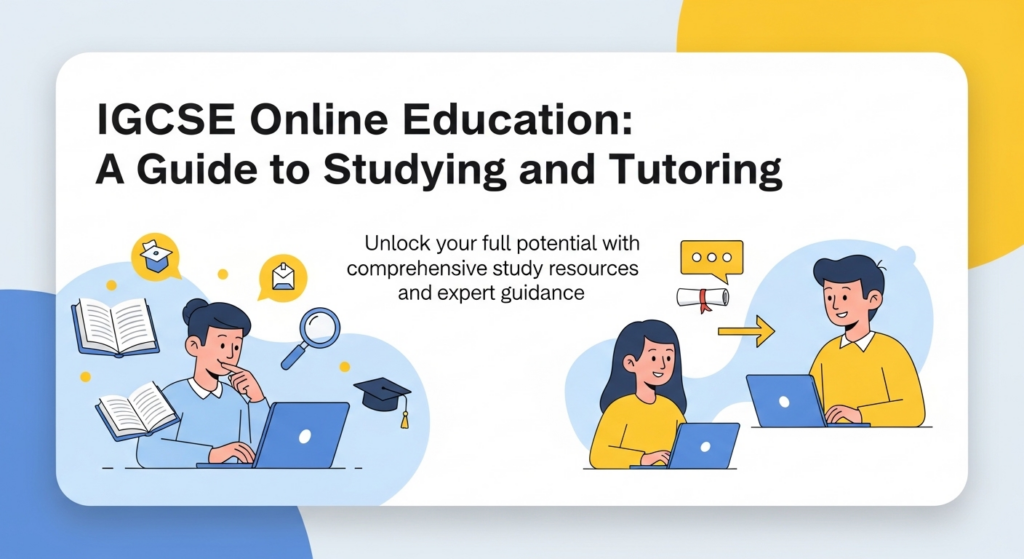
The International General Certificate of Secondary Education (IGCSE) is one of the most popular qualifications for students around the world. It provides students with the knowledge and skills needed to progress to higher education, including A-Levels, university, or vocational training. With the advancement of technology, IGCSE online education has become increasingly popular, offering students the flexibility to study from anywhere at their own pace.
Whether you’re a student aiming to complete IGCSEs, a parent looking for online homeschooling options, or someone in need of a tutor, online IGCSE courses and tutoring services have made it easier than ever to gain a world-class education. In this article, we’ll explore the various IGCSE online courses, tutoring options, and homeschooling resources that can help students achieve academic success.
What is IGCSE?
The International General Certificate of Secondary Education (IGCSE) is an internationally recognized qualification, often taken by students in their final years of secondary education. It is widely offered by British schools, international schools, and online educational platforms. The IGCSE curriculum is designed to prepare students for further academic study, including A-Level courses, or for practical, hands-on careers.
IGCSE subjects cover a wide range of topics, including:
- Mathematics
- Science (Physics, Chemistry, Biology)
- Languages (English, Spanish, French)
- Humanities (Geography, History, Business Studies)
- Arts (Art & Design, Music)
The IGCSE exams assess a student’s understanding of these subjects through written tests, oral exams, and practical assessments, depending on the subject. Students typically choose a selection of subjects to study, with the aim of completing the qualification by the age of 16 or 17.
Why Choose IGCSE Online Education?
1. Flexibility in Learning: One of the primary benefits of IGCSE online courses is the flexibility they offer. Students can study from anywhere, allowing them to balance their studies with other commitments such as extracurricular activities, family responsibilities, or part-time jobs. Whether you’re attending school or working from home, online education allows you to tailor your learning schedule to suit your lifestyle.
2. Self-Paced Learning: Online IGCSE education also gives students the opportunity to learn at their own pace. Some students may need more time to grasp certain concepts, while others may prefer to move ahead more quickly. Online learning platforms allow students to progress through their courses as quickly or slowly as they need, without the pressure of keeping up with a classroom schedule.
3. Access to Global Learning Resources: With online education, students can access high-quality resources from around the world. Many IGCSE online courses come with comprehensive video lessons, practice exams, and interactive activities that make learning more engaging. Additionally, online students can interact with tutors and peers in virtual discussion forums, creating an enriching learning experience.
4. Affordable and Convenient: For some students, online IGCSE courses and tutoring may be more affordable than traditional face-to-face schooling. Online programs often eliminate the need for commuting, allowing students to save money on transportation costs. Additionally, students can study at home, which can further reduce the costs of education.

Types of IGCSE Online Education Options
There are various types of IGCSE online learning platforms and services that cater to different needs and learning styles. Whether you are looking for full online courses, private tutoring, or homeschooling support, there are options to suit your requirements.
1. IGCSE Online Courses
IGCSE online courses are complete programs that provide all the materials and structure needed to pass IGCSE exams. These courses often include:
- Coursework: Textbooks, lesson notes, and additional reading materials.
- Interactive Activities: Quizzes, video lessons, and assignments.
- Practice Exams: Mock tests and sample papers to help students prepare for the real exams.
- Exam Support: Access to tutors and online forums to answer questions and clarify doubts.
Some of the most popular online platforms offering IGCSE online courses include:
- Oxford Home Schooling: Offering a range of IGCSE subjects with flexible schedules and tutor support.
- InterHigh: Providing online classes with live lessons and interactive materials.
- The National Extension College (NEC): Known for their high-quality courses and academic support.
2. IGCSE Online Tutoring
IGCSE online tutoring is an excellent option for students who require personalized help with specific subjects or topics. Tutors can provide one-on-one sessions to reinforce learning and explain complex concepts. Online tutoring for subjects such as English, Mathematics, Physics, or Chemistry can help students perform better in their exams.
Benefits of Online Tutoring:
- Personalized Attention: Students receive tailored instruction to address their individual needs.
- Flexible Scheduling: Tutors and students can agree on convenient times for lessons.
- Expert Guidance: Students are taught by experienced, certified tutors who specialize in their chosen subjects.
Some popular platforms for IGCSE online tutoring include:
- MyTutor: A platform offering professional tutors for various IGCSE subjects.
- Tutorful: Providing a wide range of experienced tutors who specialize in IGCSE subjects.
- Superprof: A platform where students can find tutors for various academic disciplines, including IGCSE subjects.
3. IGCSE Homeschooling Online
IGCSE homeschooling online is a perfect solution for students who want to complete their education outside of a traditional school environment. Parents can choose to provide full homeschooling support through online resources, ensuring their children receive a structured education from home.
Homeschooling allows flexibility, allowing students to focus on subjects that interest them, while still meeting the requirements for IGCSE qualifications. Online resources for homeschooling include:
- Video lessons and tutorials
- Interactive online activities
- Parent and tutor support to monitor progress and guide learning
Benefits of IGCSE Homeschooling Online:
- Personalized Learning Path: Homeschooling allows students to learn at their own pace, adapting to their strengths and weaknesses.
- Parental Involvement: Parents can be more involved in their child’s education, ensuring a personalized approach.
- Global Access: Students can access a variety of learning materials from worldwide educational platforms.
4. IGCSE Tuition and Support
In addition to full courses and tutoring, students can access IGCSE online tuition through specific services offering support for coursework, exam preparation, and academic coaching. Some services focus on particular subjects like English, Physics, or Maths, while others offer comprehensive help across all subjects.
IGCSE Online Tuition Options:
- Private Tutors: One-on-one tuition for focused learning.
- Exam Preparation: Focused sessions to prepare for final exams and improve grades.
- Coursework Assistance: Tutors can provide extra help with assignments, projects, and research.
Popular IGCSE Subjects Available Online
When choosing IGCSE online education, students can select from a variety of subjects, depending on their interests and career aspirations. Popular IGCSE subjects offered in online courses and tutoring programs include:
- IGCSE English Language & Literature: A fundamental subject that focuses on reading comprehension, writing, and literary analysis.
- IGCSE Mathematics: Offers essential mathematical skills, including algebra, calculus, and geometry.
- IGCSE Physics: A highly regarded subject for students planning careers in science and engineering.
- IGCSE Chemistry and Biology: Key subjects for students pursuing careers in medicine or environmental sciences.
- IGCSE Geography & History: Perfect for students interested in social sciences, policy, and international relations.
- IGCSE Business Studies & Economics: A great choice for students interested in business, finance, or entrepreneurship.
Each of these subjects can be pursued online with full courses, tutoring, or homeschooling options, giving students the flexibility to pursue their academic goals.
Benefits of IGCSE Online Education
1. Flexibility and Convenience:
Online learning allows students to study at their own pace, which is ideal for students with different learning speeds or external commitments such as part-time work or family responsibilities.
2. Personalization of Learning:
Whether through tailored tutoring or homeschool-based resources, IGCSE online education offers personalized learning experiences. Students can focus on their strengths while improving their weaker areas with the help of experienced tutors.
3. Cost-Effectiveness:
Online IGCSE courses are often more affordable compared to traditional schooling. With reduced overhead costs such as commuting and accommodation, students can access a high-quality education for less.
4. Access to Global Expertise:
Students can access IGCSE tutoring and courses from some of the best educators globally. Online platforms often feature experienced instructors from around the world, ensuring that students benefit from diverse perspectives.
5. Convenient Exam Preparation:
With online resources such as past papers, mock exams, and practice questions, students can effectively prepare for their IGCSE exams without the stress of classroom-based revision.
Conclusion
IGCSE online education is a powerful option for students looking to gain a world-class education in a flexible and accessible format. With the right resources, including online courses, tutoring, homeschooling, and tuition, students can excel in their exams and prepare for the future.
Whether you’re looking to improve in a specific subject, study at your own pace, or find expert help with exam preparation, IGCSE online courses and resources offer the tools you need to succeed. Take the first step today by exploring the best IGCSE online platforms and find the perfect fit for your educational journey.